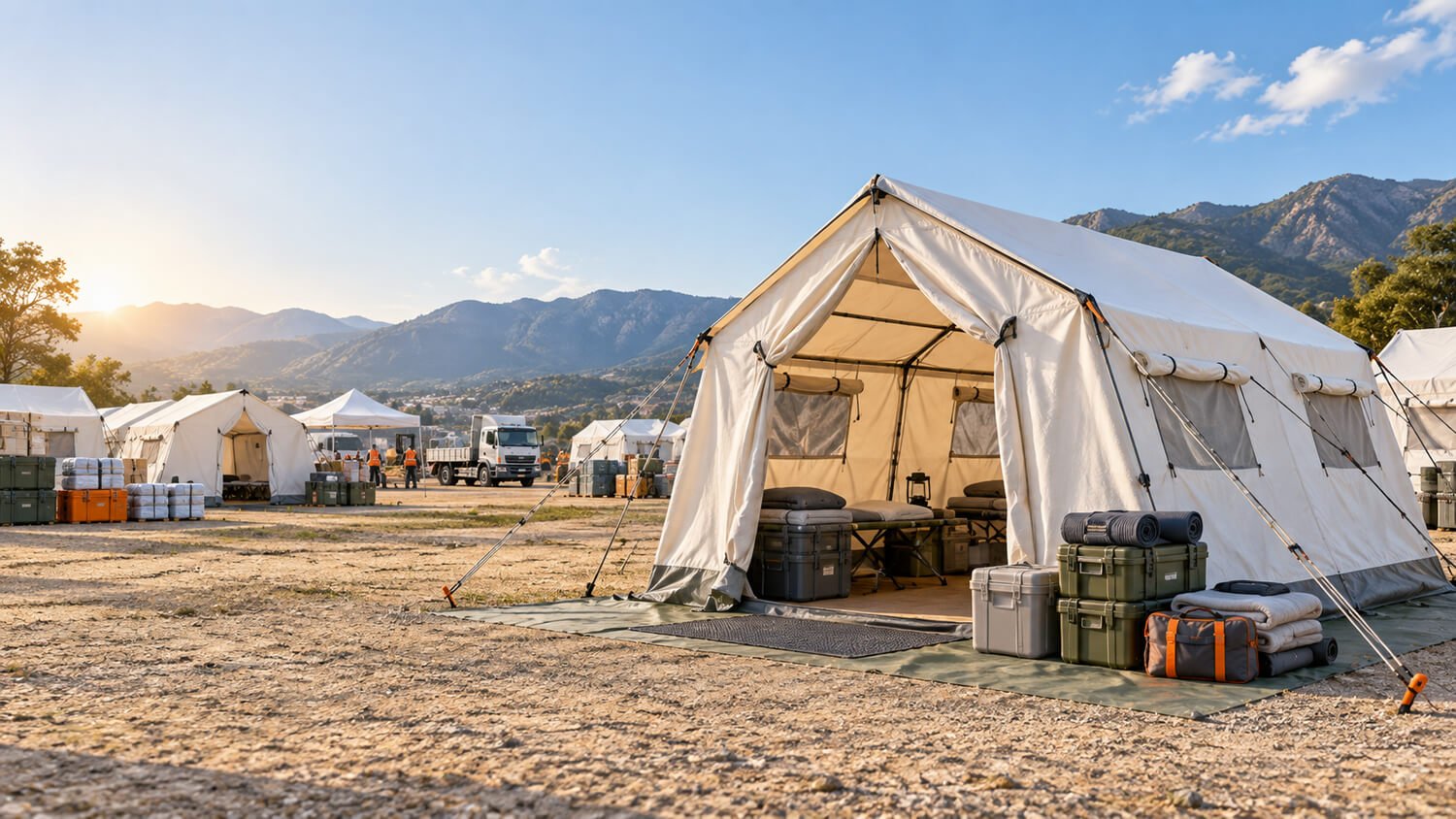
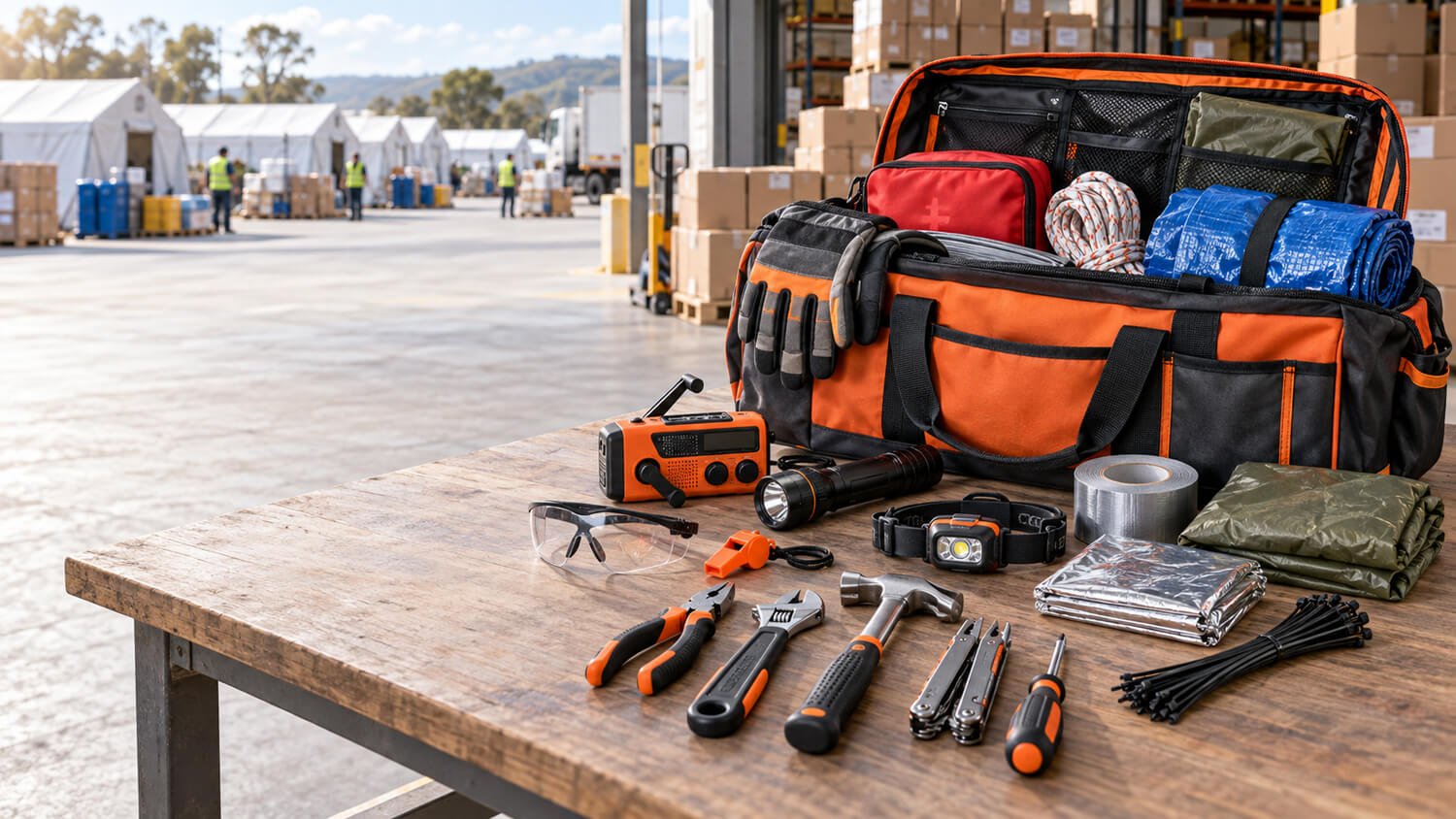
Shelter Tools & Kit for rescure supplies are organized collections of emergency tools, protective products, medical items, and temporary shelter materials. They help trained personnel support evacuation, basic first aid, signaling, site control, and short-term protection. A suitable kit must match the users, hazards, climate, response plan, and local rules of the buyer’s market.
For a distributor, government contractor, relief organization, or industrial safety buyer, the product is more than a bag filled with loose items. It is a working system. Every component needs a clear purpose, a fixed storage position, and a suitable level of durability. Users should be able to find critical items even in darkness, rain, dust, or confusion.
A balanced emergency response kit may contain:
- Portable lighting and spare power
- First-aid supplies
- Protective gloves, masks, and eye protection
- Whistles, radios, or other signaling devices
- Multipurpose hand tools
- Emergency blankets and rain protection
- Tarpaulins, ropes, and basic shelter hardware
- Water storage and sanitation products
- Identification cards and instruction sheets
The exact configuration should follow a formal risk review. A warehouse in a flood area won’t need the same setup as a mountain rescue team or a remote construction project.
The American Red Cross recommends core emergency items such as water, food, flashlights, radios, batteries, first-aid supplies, multipurpose tools, hygiene products, and emergency blankets. Its guidance also stresses that buyers should adapt a kit to the users and local hazards. The American Red Cross emergency supply guide offers a useful reference point.
Emergency Risk Assessment Before Procurement
Successful procurement begins with the risk, not the product catalog. Buyers should first identify which events could affect their sites. These may include storms, floods, earthquakes, fires, chemical releases, power failures, transport accidents, or building evacuations. The result determines what each kit must contain and where it should be stored.
Start with four practical questions:
- How many people could need support?
- How long might outside help take to arrive?
- Which hazards are present at each location?
- Who is trained to use the equipment?
Next, separate evacuation supplies from shelter-in-place materials. An evacuation kit should be portable and light enough to carry quickly. A shelter-in-place cabinet can hold more water, sanitation products, food, blankets, and communication equipment.
Workforce needs matter too. A procurement plan may need to account for children, older adults, workers with disabilities, prescription users, and people who don’t speak the main local language. Clear pictograms and multilingual instructions can make the kit easier to use.
The following risk chart offers a simple starting point:
| Risk level | Likelihood | Potential impact | Procurement action |
|---|---|---|---|
| Critical | High | Severe | Install specialist kits and arrange frequent inspections |
| High | Medium to high | Serious | Use enhanced industrial configurations |
| Moderate | Medium | Manageable | Provide standard kits with hazard-specific modules |
| Low | Low | Limited | Maintain basic supplies and review them yearly |
A kit doesn’t replace an emergency plan. OSHA explains that a workplace plan should cover emergency reporting, evacuation, worker accounting, and assigned rescue or medical duties. Its emergency action plan guidance can help buyers connect equipment purchasing with staff procedures.
Essential Rescue Tools and Shelter Equipment
The most useful kit contains dependable products that ordinary users can recognize and trained responders can operate safely. It shouldn’t become needlessly heavy. Every extra part adds cost, takes space, and may slow deployment.
Lighting is a basic requirement. LED flashlights and headlamps offer efficient power use, while a headlamp leaves both hands free. Buyers should review brightness, beam modes, battery type, water resistance, drop resistance, and storage life. Where batteries are packed inside a device, consider isolation tabs to reduce accidental discharge.
Signaling and communication products may include:
- High-output whistles
- Reflective markers
- Hand-crank or battery radios
- Two-way radios
- Signal mirrors
- Waterproof notebooks
- Permanent markers
- Printed emergency contact cards
General-purpose tools can include pliers, screwdrivers, adjustable wrenches, utility cutters, pry bars, hammers, duct tape, rope, and cable ties. Their selection should match the intended user. Professional cutting, lifting, confined-space, fire, or structural rescue equipment requires trained operators. It shouldn’t be presented as a casual household tool.
From a manufacturing viewpoint, small design decisions make a big difference. Textured tool handles improve grip when gloves are wet. Bright colors make dropped items easier to locate. Retention loops prevent heavy tools from moving inside the bag. Molded edge guards protect users and nearby consumables.
Buyers should also ask whether replacement pieces can be ordered separately. A modular kit lowers the lifetime cost because used supplies can be replenished without replacing the entire set. It also lets importers stock high-turn consumables apart from durable hardware.
Emergency Kit Specification Comparison
B2B buyers often compare kits by item count alone. That figure can be misleading. A 150-piece product may contain many small bandages but lack suitable lighting, shelter material, or communication equipment. Compare functions, specifications, and usable quantities instead.
| Feature | Basic evacuation kit | Industrial response kit | Specialist rescue kit |
|---|---|---|---|
| Typical users | Offices, schools, retail sites | Factories, warehouses, job sites | Trained emergency teams |
| Main purpose | Evacuation and short-term support | Workplace incidents and site disruption | Technical response to defined hazards |
| Bag material | Polyester or equivalent | Coated, abrasion-resistant fabric | Heavy-duty case or technical pack |
| Lighting | Compact flashlight | Headlamps plus backup lights | Task-specific lighting system |
| First-aid module | General supplies | Workplace-focused quantities | Selected for trained medical support |
| Shelter products | Blanket and rain poncho | Tarp, rope, blankets, ponchos | Climate-specific shelter system |
| PPE | Basic gloves and masks | Gloves, eye protection, visibility gear | Hazard-selected certified PPE |
| Custom labeling | Limited | Common | Usually required |
| Inspection interval | Set by plan and product dates | Monthly or site-defined | Before and after each deployment |
| Buyer type | Retailers and general distributors | Safety suppliers and project contractors | Agencies and professional operators |
Capacity should be stated clearly. “Ten-person kit” can mean ten users for a brief evacuation, not ten people for several days. Ask the supplier to define the assumed duration, environment, and consumption rate.
Water and food also require careful planning. The Red Cross recommends one gallon of water per person per day, with different durations for evacuation and home preparation. Commercial buyers should adapt that advice to local temperatures, worker activity, transport limits, and legal requirements.
A useful quotation lists the model, quantity, material, size, weight, packaging, shelf life, and applicable test documents for each component. This makes comparison slower at first but prevents unwelcome surprises after delivery.
Materials and Manufacturing Quality
A rescue bag may sit unused for months and then face rough conditions without warning. Material quality therefore matters even when the product looks simple. A low-cost fabric can fade, crack, tear near the handles, or absorb water during storage.
For soft bags, buyers should assess fabric weight, coating, abrasion resistance, seam construction, handle reinforcement, zipper size, and water resistance. Polyester is widely used because it balances cost, strength, and color stability. Nylon may provide strong abrasion performance in demanding applications. PVC-coated tarpaulin can offer high water resistance, though its weight and temperature behavior must suit the project.
Important construction details include:
- Box stitching or bar tacks at load points
- Bound internal seams
- Covered or corrosion-resistant zipper sliders
- Reinforced base panels
- High-visibility fabric or reflective tape
- Wipe-clean interior surfaces
- Replaceable identification windows
- Secure internal dividers
Metal tools should have clean edges, consistent dimensions, and suitable surface protection. Carbon-steel parts often need paint, plating, oil, or another corrosion-control process. Stainless steel may improve corrosion resistance, but the grade must match the intended use and price target.
Factory inspection should examine both appearance and function. A tool that looks good but bends under normal use is a failure. The same applies to a flashlight with an unreliable switch or a buckle that opens when the bag is lifted.
Buyers should approve a sealed reference sample before mass production. The manufacturer can then compare production units with this “golden sample.” Approved colors, materials, dimensions, labels, workmanship, and packing details should also appear in a written specification sheet.
First-Aid and Personal Protection Supplies
First-aid supplies support immediate care while qualified medical help is arranged. They don’t turn an untrained person into a medical professional. Product selection must therefore reflect both workplace hazards and the skill level of intended users.
A general module might contain adhesive dressings, sterile gauze, roller bandages, triangular bandages, tape, cleansing wipes, scissors, tweezers, gloves, an emergency blanket, and a resuscitation barrier. Quantities should relate to the workforce size, worksite layout, and distance from professional care.
OSHA states that workplace first-aid supplies should be adequate for the site’s size, location, number of employees, hazards, and distance from medical services. For covered maritime workplaces, it also requires suitable supplies to be accessible and maintained in a dry, sterile, serviceable condition. See the official OSHA medical and first-aid standard.
PPE requires equally careful specification. “Protective glove” isn’t enough information for a professional purchase order. A buyer should state the hazard, material, size range, performance requirement, and required certification. A thin examination glove, for example, serves a different purpose from a cut-resistant work glove.
Typical PPE categories include:
- Disposable medical gloves
- Heavy-duty work gloves
- Safety glasses or goggles
- High-visibility vests
- Dust or particulate masks
- Rain ponchos
- Protective helmets where required
Medical products and PPE may face country-specific registration, labeling, or conformity rules. Importers should confirm these requirements before production. Expiry dates, lot numbers, manufacturer details, and instructions must remain visible after the supplies are packed into the finished kit.
Portable Shelter and Environmental Protection
Shelter products protect people from wind, rain, cold surfaces, direct sun, and loss of body heat. For many buyers, these products are just as important as the hand tools. A minor delay in evacuation can become dangerous when people remain exposed to harsh weather.
A basic module may include emergency blankets, rain ponchos, ground sheets, tarpaulins, cord, stakes, and repair tape. More advanced configurations can include compact tents, insulated sleeping products, privacy screens, water containers, and sanitation supplies.
When comparing a tarp or temporary cover, examine:
- Finished size rather than cut size
- Fabric or film thickness
- Waterproof performance
- Reinforced corners and edges
- Eyelet spacing and corrosion resistance
- Tear strength around anchor points
- Folded size and total weight
- Operating temperature range
- Printed setup instructions
The intended climate should influence every choice. Lightweight reflective blankets are compact and useful for heat retention, yet they don’t offer the comfort or durability of insulated blankets. A thin rain poncho may suit brief evacuation, while repeated field deployment calls for stronger material and sealed seams.
Sanitation is another part of safe shelter support. Waste bags, ties, tissues, soap, sanitizer, absorbent material, and privacy solutions may be needed. However, chemical products can face transport restrictions and special labeling requirements.
A manufacturer should pack shelter components in a logical deployment order. Items needed first belong near the top or in marked external pockets. Setup instructions should use diagrams, short sentences, and durable printing. When rain is pouring down, nobody wants to hunt through a dense manual to learn which knot or fixing point to use.
Packaging, Labeling, and Kit Organization
Organization can determine whether a kit works under pressure. A neat product photograph isn’t enough. Users must be able to open the pack, recognize a module, remove it, and return unused items without creating confusion.
Color coding is a simple solution. Red can identify first aid, orange can mark tools, blue can indicate water or sanitation, and silver can identify shelter supplies. Colors should always be supported by text and symbols because some users may have limited color vision.
Good kit organization may include:
- Transparent inner pouches
- Large zipper pulls suitable for gloved hands
- Printed contents lists
- Numbered inspection seals
- Separate sterile and non-sterile modules
- Removable hook-and-loop pouches
- Barcode or QR inventory labels
- Multilingual instructions
- Space for the buyer’s emergency contact details
Outer cartons need equal attention. Export packaging should protect the kit during stacking, loading, ocean freight, storage, and final distribution. Carton markings may show the model, quantity, net weight, gross weight, dimensions, batch number, production date, and handling symbols.
For distributors, retail-ready packaging may be important. Government and industrial buyers may prefer plain cartons, asset labels, or serialized records instead. This should be settled before the sample stage.
A useful inventory sheet lists each component, quantity, shelf life, lot number, and storage location. Where kits contain expiring goods, place the earliest expiration date on the outside label. That small step makes scheduled replacement much easier.
If you’re preparing a tender, request a technical packing list and customization worksheet early. It will help your purchasing, safety, and logistics teams review the same facts before approving a sample.
OEM and ODM Customization for B2B Buyers
OEM customization allows buyers to create a kit for their market instead of accepting an unsuitable standard bundle. The process can cover component selection, colors, logos, labels, languages, manuals, inner pouches, cartons, and pallet configuration.
A well-managed custom project usually follows this flow:
- The buyer submits the application, market, quantity, and target specification.
- The manufacturer reviews risks, component availability, and compliance needs.
- Both sides confirm the bill of materials.
- A sample is produced and evaluated.
- Artwork and packaging receive written approval.
- Mass production begins under an agreed inspection plan.
- Finished goods are checked before shipment.
Logo application methods may include screen printing, heat transfer, woven labels, embroidery, molded badges, or printed stickers. The best choice depends on the surface, order size, expected wear, color detail, and budget.
ODM development goes further. It may require a new bag layout, molded insert, unique module arrangement, or retail packaging structure. These projects need clearer ownership of drawings, tooling, testing expenses, and design changes.
Low minimum order quantities can help buyers test a market, but high customization and low volume don’t always sit comfortably together. Custom fabric colors, printed cartons, or molded parts may carry separate minimums. A transparent manufacturer will explain which elements can be changed economically at each order level.
To shorten development time, provide a target price range, required delivery date, destination market, forecast volume, logo files, and mandatory standards with the first inquiry. Clear information lets the supplier propose a realistic solution instead of guessing.
Standards, Testing, and Quality Control
There is no single universal approval that makes every emergency kit suitable for every market. The finished product may contain medical devices, PPE, batteries, food, water products, tools, textiles, and chemical items. Each category can have different rules.
Buyers should identify the destination country and sales channel before confirming a bill of materials. A product accepted for an industrial project may require different documents when sold through retail or supplied under a public tender.
A practical quality plan can include:
| Inspection stage | Main checks | Typical record |
|---|---|---|
| Incoming materials | Fabric, hardware, dimensions, certificates, appearance | Incoming inspection report |
| First production unit | Construction, colors, artwork, function | First-article approval |
| In-process control | Stitching, assembly, count, label position | Production inspection sheet |
| Functional testing | Lights, tools, closures, load points | Test record |
| Final inspection | Quantity, workmanship, packing, carton marks | Final inspection report |
| Shipment release | Documents, pallet condition, order match | Release authorization |
Traceability is especially important for dated supplies. Lot codes should connect the packed component to its supplier and inspection records. If a problem appears, traceability allows a focused response instead of recalling every product.
Buyers should request evidence, not vague claims. Relevant evidence may include test reports, declarations, material data, calibration records, quality-system documents, or market-specific certificates. Their relevance and validity should be checked.
Quality control also covers quantity accuracy. A missing low-cost item can make the whole kit incomplete. Count controls, weighing checks, barcode scanning, and sealed module bags help reduce errors during assembly.
Bulk Purchasing and Supplier Evaluation
The right supplier should understand both manufacturing and emergency-product integration. Ask how the company controls multiple component vendors, expiring goods, substitutions, artwork versions, and final assembly.
A serious supplier review should cover:
- Factory or assembly-site capability
- Quality-control responsibilities
- Monthly production capacity
- Sample development time
- Standard and custom minimum order quantities
- Component traceability
- Warranty and replacement policy
- Export experience
- Packaging engineering
- On-time delivery performance
- Change-control procedure
Price should be reviewed as total landed cost. A low unit price may be offset by weak cartons, high replacement rates, poor container utilization, document errors, or delayed delivery. Compare equivalent bills of materials and Incoterms. Otherwise, two quotations may look similar while covering very different products.
Sampling is vital. Inspect the bag under load, operate every tool, test each light, read the instructions, and confirm the item count. Check whether printed labels stay attached and whether sterile packs are undamaged. If the sample is difficult to repack, users will face the same problem.
Order planning should leave time for approvals, production, inspection, and freight. Seasonal weather events can raise demand for blankets, tarps, batteries, and lighting products. Forecast orders reduce the chance of sudden component substitutions.
Before paying a deposit, confirm the specification, approved sample, quantity tolerance, inspection standard, packing method, delivery terms, and procedure for nonconforming goods in writing.
Storage, Inspection, and Staff Training
Even a well-made kit can fail if it’s locked away, damaged, or filled with expired supplies. Storage and maintenance should therefore be part of the purchasing plan.
Keep equipment in a visible, marked, and accessible location. Avoid excessive heat, moisture, direct sunlight, and contact with damaging chemicals. Mobile teams may need vehicle kits, while large sites may need several stations rather than one central cabinet.
Use a routine inspection checklist:
- Confirm that the kit is present and accessible.
- Check the security seal or opening record.
- Inspect the bag, case, handles, and closures.
- Test lights, radios, and replaceable batteries.
- Review medical and food expiration dates.
- Look for corrosion, leaks, moisture, or damaged packs.
- Replace used or missing items.
- Update contact cards and instructions.
- Record the inspector’s name and date.
Inspection frequency should match the site and applicable rules. OSHA’s construction guidance states that covered first-aid kits must be checked before being sent to a job and at least weekly on each job. Requirements vary, so buyers must confirm the rules for their own industry and country.
Training brings the equipment to life. Employees should know where kits are stored, who may use specialist tools, how emergencies are reported, and when evacuation is safer than intervention. Run drills, note delays, and update the configuration when problems emerge.
The goal isn’t to encourage untrained rescue attempts. It is to help people follow a planned, safe response until professional services take control.
Frequently Asked Questions
What should a commercial rescue supply kit contain?
It should contain lighting, signaling equipment, basic tools, first-aid supplies, suitable PPE, shelter materials, sanitation products, and instructions. The final contents must reflect site hazards, user numbers, climate, and responder training.
How many people can one emergency kit support?
Capacity depends on supply quantities and the planned support period. Buyers should define both values in the specification. A “ten-person” evacuation kit may not support ten people during a multi-day disruption.
Can a manufacturer customize the components and bag?
Yes. Common OEM options include component selection, pouch layout, bag color, logo application, instruction language, carton printing, barcodes, and private labels. A custom sample should be approved before full production begins.
How often should rescue supplies be inspected?
Many organizations perform monthly visual checks, with extra inspections after use, relocation, or severe conditions. Applicable regulations may require another schedule. Batteries, sterile packs, dated products, tools, and bag damage need particular attention.
What documents should an overseas buyer request?
Request a detailed bill of materials, product specifications, available test reports, declarations, traceability information, shelf-life data, packing details, inspection records, and any documents required by the destination market or tender.
Are standard kits suitable for every country?
No. Medical products, PPE, batteries, food, chemicals, labeling, and instructions can face local requirements. Buyers should confirm destination-market rules before approving the sample or placing a production order.
How can buyers compare quotations fairly?
Compare identical specifications, quantities, test requirements, packaging, warranties, Incoterms, and delivery terms. Don’t rely on piece counts alone. Review the function, quality, usable quantity, and documentation for every major component.
What information helps a manufacturer prepare an accurate quotation?
Provide the destination country, application, user count, required components, quality level, order quantity, logo files, packaging needs, standards, target delivery date, and preferred trade terms. Photos or tender documents can also help.
Conclusion
A dependable rescue and shelter system begins with a clear hazard assessment. It then brings together appropriate tools, first-aid supplies, PPE, temporary shelter materials, instructions, packaging, and staff procedures. Buyers should evaluate the system as a whole rather than choosing the product with the largest advertised item count.
For overseas distributors, contractors, humanitarian purchasers, and industrial safety companies, supplier control is central to a successful order. Detailed specifications, approved samples, traceable components, functional testing, accurate packing, and documented inspections reduce commercial risk.
Customization can also improve the value of the finished product. A well-planned OEM kit fits the buyer’s users, climate, language, brand, storage method, and distribution channel. It’s easier to inspect, easier to replenish, and faster to deploy.
Send your required bill of materials, destination market, logo, estimated quantity, and packaging needs to the manufacturing team. Ask for a technical proposal, sample plan, production lead time, and itemized quotation. This gives both parties a firm basis for building Shelter Tools & Kit for rescure supplies that are practical, durable, and ready for responsible deployment.