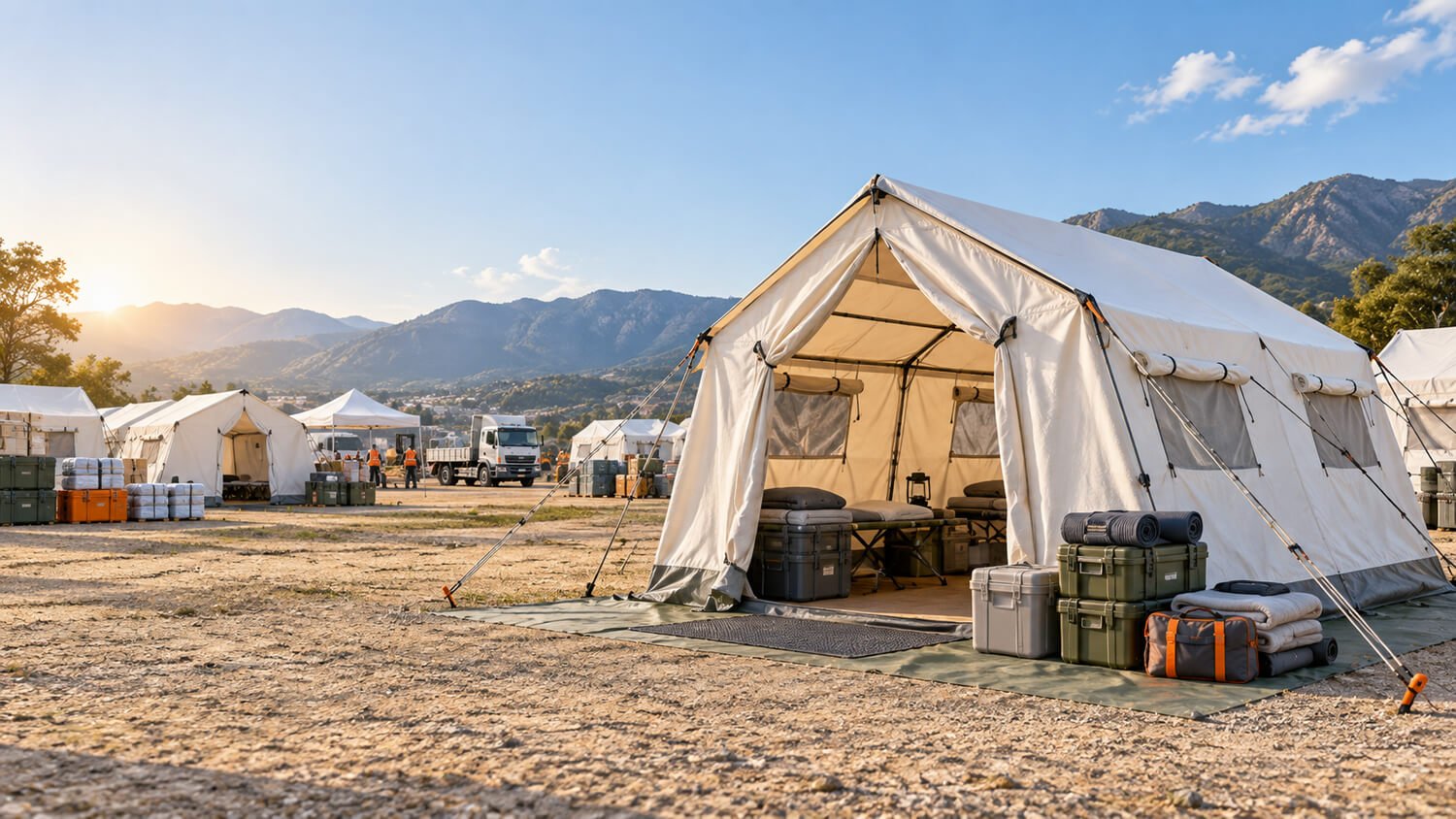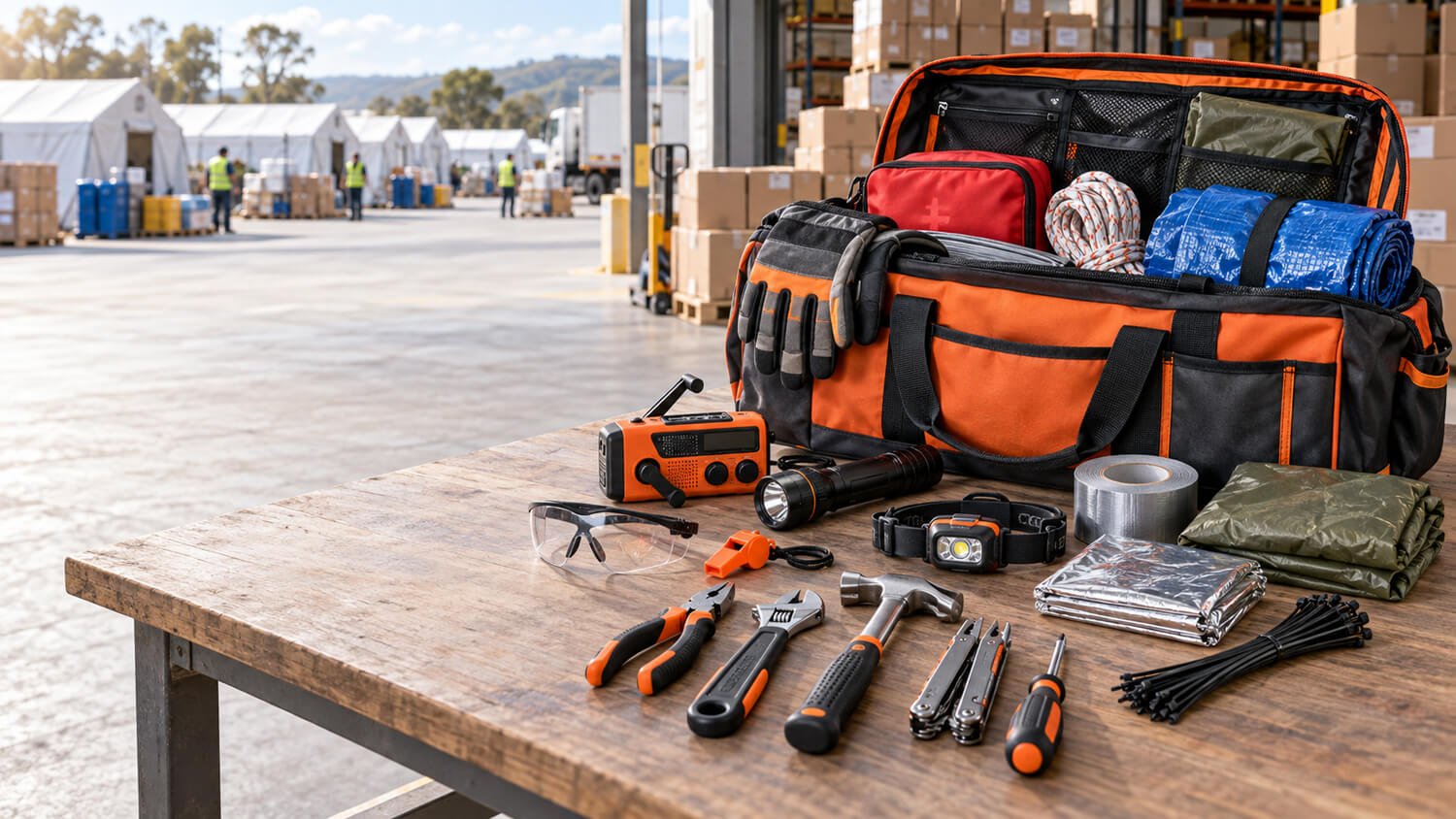
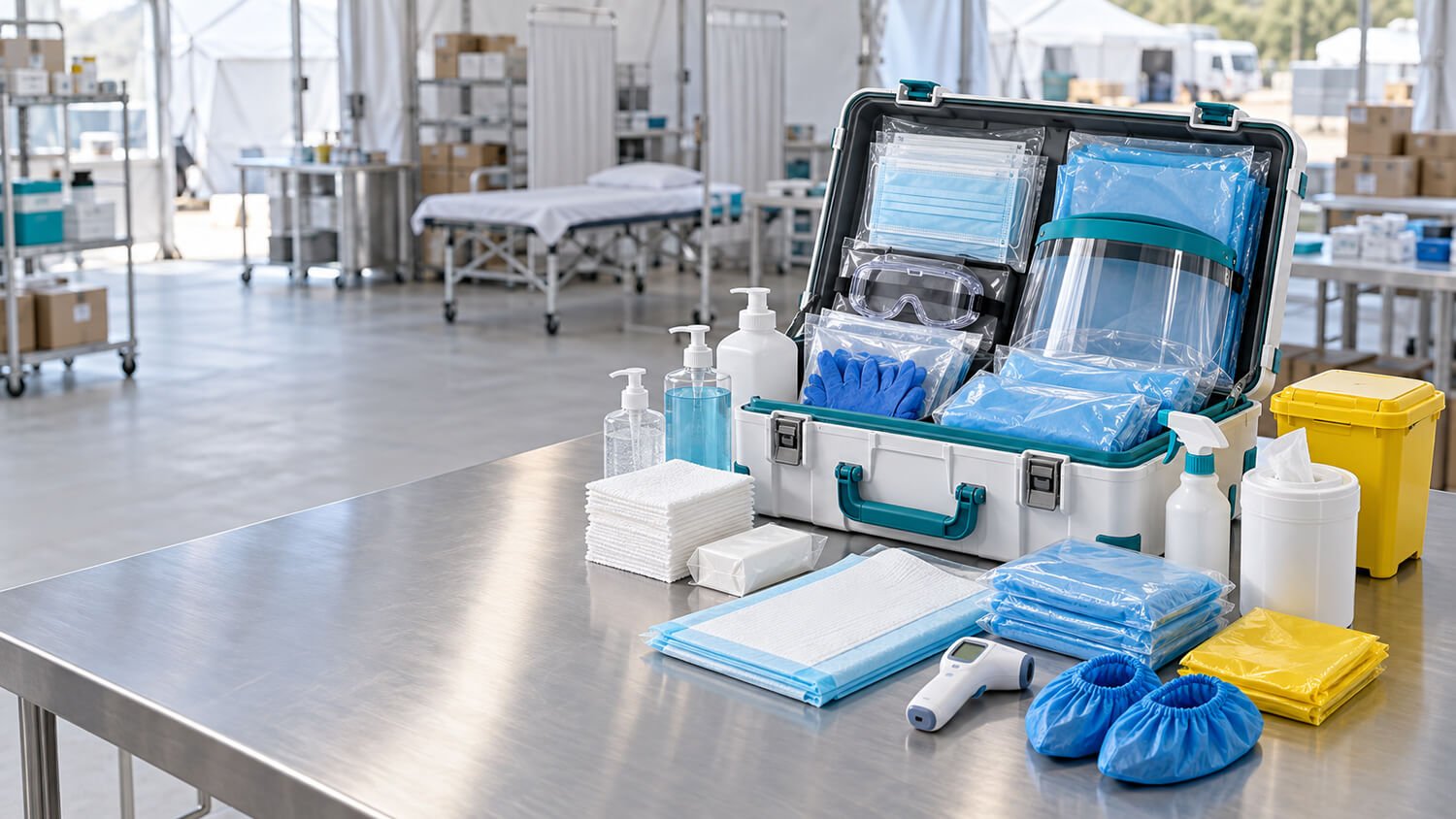
A Hygiene Kit for rescure supplies is a prepared set of personal care, handwashing, sanitation, menstrual hygiene, and household cleaning products. It helps displaced people, rescue workers, families, and shelter residents maintain basic hygiene when normal services fail. A suitable kit must match the users, local culture, climate, response period, water access, and distribution method.
For a B2B buyer, a hygiene pack isn’t simply a collection of low-cost toiletries. It is part of a wider emergency response system. Each product needs a clear purpose. Quantities must support the planned number of users. Labels must be easy to understand, and the complete pack must survive transport and storage.
Typical customers include:
- Humanitarian organizations
- Government relief departments
- Emergency management agencies
- Shelter operators
- Disaster-response contractors
- Medical and safety distributors
- Mining and construction companies
- Schools, factories, and public facilities
Common contents include soap, toothbrushes, toothpaste, towels, combs, toilet tissue, detergent, waste bags, sanitary products, covered buckets, and water containers. However, the final list shouldn’t be copied from a generic retail kit.
UNICEF’s WASH and Dignity Kit offers a useful real-world reference. It includes water storage products, soap, laundry detergent, menstrual care items, a torch, and a whistle. The kit is designed around household needs during an emergency, rather than item count alone. You can review the official UNICEF WASH and Dignity Kit for more context.
Your best starting point is a written needs assessment. It helps the manufacturer recommend practical contents, pack sizes, materials, and shipping methods without adding unnecessary cost.
Emergency Hygiene Needs Assessment
Every effective project starts with the people who will use the kit. A standard design may work for one region and fail in another. The buyer must therefore define the users, conditions, response length, and distribution plan before requesting prices.
Population size comes first. Decide whether one pack will serve one person, a couple, or a family. UNICEF describes a WASH and dignity configuration intended for a family of five for one month. That doesn’t mean the same quantity will work everywhere. Climate, water access, personal habits, and local product sizes affect consumption.
Ask these planning questions:
- How many people will receive support?
- How many adults, children, and infants are included?
- How long should the contents last?
- Is clean water available?
- Will people stay in shelters, camps, homes, or temporary sites?
- Are users walking long distances with the packs?
- What languages do they read?
- Are there cultural preferences for certain products?
- Will local teams provide hygiene education?
Climate also affects the specification. Hot and humid areas may need more bathing soap, laundry products, and moisture-resistant packing. Cold regions may require skin-care products and thicker towels. Flood responses may place greater weight on water containers, cleaning products, and sealed packaging.
Privacy and personal safety also matter. People may need to walk to shared toilets or washing points after dark. A flashlight and whistle can support safer movement. UNICEF includes these products in its family-focused WASH pack for that reason.
Finally, check what local markets can still provide. Emergency procurement should fill real gaps without harming local recovery. In some cases, a compact starter pack followed by local vouchers or replenishment works better than shipping a large long-term kit.
Personal Care and Handwashing Essentials
Hand and personal hygiene products form the center of most emergency packs. They help users clean their hands, bodies, teeth, clothing, and frequently touched items. These basic acts become harder when water systems, shops, and transport links stop working.
Soap is usually the first item to specify. Buyers should define whether they need body soap, laundry soap, or a multipurpose bar. A purchase document should state the net weight, scent preference, packaging type, ingredient restrictions, shelf life, and required market documentation. “One bar of soap” leaves too much room for variation.
A practical personal care module may include:
- Wrapped body soap
- Toothbrushes with protective caps
- Fluoride toothpaste where suitable
- Quick-drying towels
- Combs
- Nail clippers
- Toilet tissue
- Pocket tissues
- Hand-cleaning products
- Washcloths
- Simple illustrated instructions
Products shared by a family need different quantities from individual items. Each person should normally have a toothbrush. However, several people may share a tube of toothpaste or a bar of laundry soap.
Packaging needs careful thought. Toothbrush bristles must stay clean. Soap shouldn’t soak into paper cartons after a small leak. Liquids should have secure closures and secondary protection where needed. If alcohol-based products are included, buyers must also review transport, storage, and labeling rules.
The World Health Organization treats hand hygiene as a combination of materials, information, and a suitable physical and social setting. Supplies alone aren’t enough. Users also need water access, a place to wash, and clear instructions.
From a manufacturing viewpoint, component balance is critical. Buyers sometimes request many small products to raise the advertised piece count. Yet fewer, properly sized items often provide more real value. Your technical sheet should therefore state the expected users and support period for each consumable.
Water, Sanitation, and Household Cleaning
Personal hygiene depends on safe water and clean surroundings. For this reason, many emergency hygiene packs include water, sanitation, and hygiene products, often described as WASH supplies.
A covered bucket supports washing, cleaning, and safer household water storage. A separate jerrycan or collapsible container helps users carry water from a distribution point. Buyers should specify capacity, handle strength, cap design, material, stackability, and whether the product is intended for drinking water.
UNICEF’s household pack includes a 14-liter bucket with a lid and a 10-liter jerrycan. These are reference values, not universal rules. The correct capacities depend on user age, carrying distance, water source, and local practice.
Sanitation and cleaning supplies may include:
- Laundry detergent
- Multipurpose cleaning cloths
- Waste bags and ties
- Toilet tissue
- A washing basin
- Covered water buckets
- Collapsible jerrycans
- Clothesline and pegs
- Dishwashing products
- Surface-cleaning products
- Child potties where appropriate
Chemical products need precise labels. Instructions should show dilution, safe use, storage conditions, and warnings. Never describe a product as suitable for water treatment unless it has been approved and documented for that exact purpose.
Water-treatment tablets or solutions require additional care. Their selection depends on water conditions, active ingredient, dosage, packaging, local authorization, and user training. These products shouldn’t be substituted during production without written buyer approval.
A useful rule is to separate personal products from household chemicals inside the pack. Inner bags reduce the effect of leaks. They also make distribution easier when a program provides certain modules to selected households.
For transport, test filled containers for leakage and closure security. Empty containers should also be checked for cracks, sharp edges, weak handles, and poor-fitting lids. One faulty cap can damage several kits in the same export carton.
Menstrual Hygiene and Dignity Supplies
An inclusive hygiene program must consider women, girls, and other people who menstruate. Menstrual products aren’t optional extras. They help users manage health, privacy, mobility, education, work, and personal dignity during a crisis.
Product selection should come from consultation with local users or experienced program staff. Some communities prefer disposable pads. Others use reusable pads or multipurpose cloths. Climate, water access, drying space, waste collection, and cultural practice all affect the right choice.
A dignity module may contain:
- Disposable sanitary pads
- Reusable menstrual pads
- Suitable underwear in several sizes
- Multipurpose cloths
- Soap for washing
- Sealable storage pouches
- Waste bags
- Illustrated use and care instructions
- A small flashlight
- A personal safety whistle
Reusable products can lower waste and support longer use. However, users need enough water, soap, privacy, and safe drying conditions. Clear washing and drying guidance is essential. Disposable products may be easier during the first days of an emergency, but they create more waste and need continued replenishment.
Underwear is another specification challenge. A single size won’t fit all recipients. Buyers may choose a planned size mix, separate size-labeled packs, or local distribution based on beneficiary needs. Fabrics should be comfortable, washable, and suited to the climate.
Color and appearance matter too. Very light reusable materials may show stains, while dark materials can make cleaning checks harder. The buyer should approve fabric, absorbent layers, fasteners, stitching, and washing instructions through a sample.
UNICEF notes that the menstrual products in its WASH and dignity packs can vary with cultural context and distribution needs. That flexibility is an important lesson for B2B procurement: user dignity must guide the specification, not a fixed catalog list.
Hygiene Kit Configuration Comparison
Different emergencies need different pack formats. Buyers can control cost and improve distribution by selecting the correct configuration rather than making one oversized kit serve every situation.
| Kit type | Intended users | Typical duration | Main contents | Best application |
|---|---|---|---|---|
| Individual hygiene pack | One adult or adolescent | Several days to one month | Soap, toothbrush, toothpaste, towel, tissue, comb | Evacuation centers and worker deployment |
| Family WASH pack | One household | Several weeks | Personal items, bucket, water carrier, detergent, cleaning supplies | Displacement and flood response |
| Dignity pack | Women and adolescent girls | Program-defined | Menstrual products, underwear, soap, storage pouch, safety items | Inclusive humanitarian support |
| Infant-care pack | Babies and caregivers | Short-term support | Diapers, wipes, baby soap, changing products, waste bags | Family shelters and evacuation centers |
| Institutional hygiene pack | Shared facility | Usage-based | Bulk soap, cleaning tools, waste liners, tissue, dispensers | Schools, clinics, shelters, and camps |
| Rapid-response pack | Mobile or newly displaced users | First few days | Compact toiletries, tissues, soap, waste bags, towel | Immediate distribution after an event |
The comparison should continue beyond the kit name. Buyers need to review the number of users, actual quantities, net product weights, container capacities, package dimensions, carton weight, and replenishment plan.
A family pack can improve freight efficiency because shared products don’t need repeated individual packaging. However, individual packs are easier to distribute when households are split or population data is uncertain.
Institutional products often need larger containers and stronger packaging. A shelter may use wall-mounted dispensers or bulk refill systems. In contrast, a mobile user needs compact items that won’t leak inside a backpack.
A modular design offers a useful middle path. The main pack can contain universal items, while separate modules address infants, menstrual care, disability needs, or cold weather.
Soft CTA: Request a component matrix and technical packing list from the manufacturer before tender approval. This will help your program, procurement, and logistics teams compare equal specifications.
Product Materials and Technical Specifications
A professional request for quotation should define measurable features. Brand names alone aren’t enough, and broad terms such as “good quality” can’t be inspected objectively.
For soap and toothpaste, state the required net content, packaging, ingredient restrictions, fragrance, shelf life, labeling language, and applicable documentation. If a buyer needs vegan formulas, fragrance-free products, or market-specific ingredient limits, those points should appear in the specification.
Textile products require equal care. For towels and washcloths, define dimensions, material composition, fabric weight, edge finish, color, washing performance, and packaging. A lightweight towel dries quickly and costs less to ship. A heavier towel may feel better and last longer. Neither is automatically correct.
For bags, common specification points include:
- Fabric type and weight
- Coating or lining
- Finished dimensions
- Handle construction
- Seam reinforcement
- Zipper or drawstring design
- Print method
- Logo size and position
- Maximum packed weight
- Carton quantity
Plastic containers should be free from sharp edges and strong odors. Lids need a reliable fit. Handles must support the intended filled load. If a container will touch drinking water, the buyer should request evidence that the material and finished product meet destination-market requirements.
Liquid bottles need leak testing. Manufacturing controls may include cap-torque checks, inverted storage, closure inspection, and secondary sealing. Test methods and acceptance limits should be agreed before production.
Don’t invent tight tolerances merely to make a specification look technical. Set tolerances according to product function, production method, regulations, and supplier capability. A clear, realistic tolerance is far more useful than an impressive figure that nobody can maintain.
Emergency Kit Packaging and Labeling
Packaging must protect the products from factory assembly through final distribution. It also needs to help workers identify, count, carry, and issue kits quickly.
The outer bag may be a drawstring sack, backpack, zippered holdall, plastic bucket, or reusable household container. The right choice depends on packed weight, distribution method, climate, budget, and expected reuse.
A good layout separates products into clear modules:
- Personal care
- Menstrual care
- Water and sanitation
- Household cleaning
- Infant care
- User information
Transparent or color-coded inner bags save time. Still, color should never be the only identifier. Text and pictograms help people with limited color vision or language skills.
Labels may include:
- Kit name and model
- Intended user group
- Complete contents list
- Quantity of each item
- Batch or lot number
- Packing date
- Earliest expiry date
- Storage instructions
- Country of origin where required
- Buyer or program logo
- Distribution warning
- Barcode or QR code
Instructions should use short sentences and clear drawings. They must explain any unfamiliar reusable products, chemical dilution, or water-treatment steps. Have native speakers review translations. A technically correct phrase can still confuse local users.
Export cartons require strong board, secure sealing, and readable marks. Buyers should agree on maximum carton weight, carton dimensions, pallet pattern, and container-loading plan. Smaller cartons may improve manual handling but use more packaging.
UNICEF explains that packing and labeling affect how quickly emergency supplies can be distributed and used. That principle applies equally to commercial relief orders: packaging is part of the product, not an afterthought.
OEM and ODM Hygiene Kit Manufacturing
OEM production allows importers, distributors, and relief contractors to create a kit for a defined market. Common options include component changes, branded bags, private labels, multilingual instructions, custom cartons, barcodes, and program-specific packing lists.
A controlled development process should follow these stages:
- Buyer requirement review
- Draft bill of materials
- Component specification approval
- Price and lead-time confirmation
- Preproduction sample
- Artwork approval
- Packaging test
- Mass production
- In-process inspection
- Final inspection and shipment release
The sample should represent the proposed order as closely as possible. Buyers need to check product sizes, scents, colors, closures, printed text, item count, pack weight, and ease of repacking.
ODM work may include a new bag pattern, custom plastic container, special inner modules, or a unique distribution format. These changes can require tooling, longer development time, and higher minimum quantities. Tool ownership and design rights should be written into the agreement.
Low minimum order quantities are possible for many standard components. However, custom toothpaste tubes, soap wrappers, fabric colors, and printed cartons may each have separate production minimums. Your manufacturer should explain these limits before collecting a deposit.
From our manufacturing perspective, artwork control is one of the most common pressure points. A small revision to a warning, barcode, or logo can affect several components. Use one approved artwork register. Give every file a version number and approval date.
Buyers should never assume that a custom logo proves product compliance. Branding and technical conformity are separate matters. Confirm both before placing the bulk order.
Quality Control and Compliance
Quality control begins before assembly. Each component should be matched against an approved specification, sample, or test requirement when it arrives. Problems found at this stage are easier to correct than errors discovered after thousands of kits have been packed.
A practical control plan may include:
| Production stage | Main inspection points | Recommended evidence |
|---|---|---|
| Supplier approval | Capability, documents, product history | Supplier evaluation record |
| Incoming inspection | Quantity, size, weight, appearance, dates | Incoming inspection report |
| First-kit approval | Complete contents, layout, artwork, function | Signed first-article record |
| In-process control | Count, sealing, coding, packing sequence | Line inspection sheet |
| Functional testing | Container leaks, closures, bag handles | Test log |
| Final inspection | Workmanship, labels, cartons, quantities | Final inspection report |
| Shipment release | Order match, documents, pallet condition | Release authorization |
Traceability matters for soap, toothpaste, wipes, chemicals, menstrual products, and other dated goods. The manufacturer should record component lots and connect them with finished-kit production batches.
Inspection sampling should follow a written plan. ISO published ISO 2859-1:2026 for lot-by-lot acceptance sampling by attributes. Buyers and suppliers may use a relevant sampling approach, but they still need to agree on inspection level and acceptance criteria. Review the official ISO sampling-standard information when building your quality agreement.
Compliance depends on the destination market. Cosmetics, detergents, chemical mixtures, plastic food-contact products, batteries, and sanitary products may follow different rules. Importers should verify local requirements before approving components.
Don’t accept a general claim such as “international standard.” Ask which standard applies, which product was tested, who issued the report, and whether the document remains valid.
Bulk Procurement and Export Logistics
Bulk hygiene packs combine many products from different supply chains. Lead time depends on the slowest approved component, not simply the time needed to place products into a bag.
Your inquiry should include:
- Destination country
- Intended users
- Required support period
- Detailed component list
- Order quantity
- Packaging method
- Label languages
- Required standards
- Inspection expectations
- Target delivery date
- Preferred Incoterm
- Port or final destination
A complete quotation should identify each component, specification, quantity, package format, unit price, tooling charge, sample cost, production lead time, carton data, and quotation validity.
Compare total landed cost instead of unit price alone. Weak export cartons can cause damage. Poor container use raises freight cost. Missing labels can delay customs clearance or distribution. Short shelf life can create waste before the goods reach users.
Pre-positioned inventory allows faster response, but it must be managed carefully. WHO notes that standardized emergency kits may be held in strategic locations for rapid shipment. Its emergency health kits overview shows how standardization and advance positioning support emergency readiness.
Buyers can use a similar model. Keep a standard base kit ready, then add regional modules when demand appears. This approach shortens response time while preserving local flexibility.
Before shipment, confirm the packing list, commercial invoice, origin documents, required certificates, carton marks, pallet treatment, and dangerous-goods status. Chemical or alcohol-based products may affect transport options. Early review prevents last-minute removal or repacking.
Storage, Distribution, and Replenishment
A completed hygiene pack still needs correct storage and distribution. Heat, moisture, direct sunlight, pests, and poor stock rotation can damage products long before an emergency occurs.
Warehouses should use clean, dry storage areas. Keep cartons off the floor and away from walls where moisture may collect. Follow any temperature limits printed on the products. Record batch numbers, quantities, receipt dates, and expiry dates in the inventory system.
A simple stock-control schedule should include:
- Monthly package-condition checks
- Regular expiry reviews
- First-expire, first-out rotation
- Leak and pest inspections
- Random kit-content checks
- Updated distribution records
- Replenishment triggers
- Annual specification review
Distribution teams need accurate beneficiary data. Family size, age, disability, infant needs, and menstrual requirements affect allocation. Staff should explain the kit’s contents and demonstrate unfamiliar products. Handing over an item without guidance can reduce its value or create safety concerns.
Feedback is one of the strongest tools for product improvement. Ask users whether quantities were adequate, products were familiar, instructions were clear, and containers were easy to carry. Also ask what wasn’t used. Unused items may reveal cultural mismatch, unclear directions, or poor quality.
The kit specification should change when evidence supports an update. UNICEF notes that feedback is used to review its WASH and dignity products. This keeps the design connected to real household needs.
After a distribution, record stock consumed and any damaged units. Replenish early rather than waiting for the next emergency. Preparedness works best when the product, warehouse, staff, and supply agreement are all ready together.
Frequently Asked Questions
What products should a basic emergency hygiene kit contain?
A basic pack normally includes soap, toothbrushes, toothpaste, towels, toilet tissue, combs, laundry products, waste bags, and cleaning cloths. Water containers, menstrual products, infant supplies, and safety items can be added after a user-needs assessment.
How many people should one hygiene kit support?
The kit may support one person or a household. Buyers must state both the number of users and intended duration. Household size, climate, water access, cultural practices, and product consumption rates will change the quantities required.
How long can hygiene kits remain in storage?
Storage life depends on the shortest-dated component and warehouse conditions. Toothpaste, wipes, chemicals, and some personal care products may have expiry dates. Buyers should record the earliest expiry date outside each completed pack.
Can the contents be customized for a local market?
Yes. An OEM manufacturer can adjust products, sizes, scents, colors, menstrual care options, instructions, labels, bags, and cartons. Local users or program teams should review the proposed contents before the buyer approves mass production.
What information is needed for an accurate quotation?
Provide the destination, user group, quantity, support period, component list, quality requirements, logo files, languages, packaging needs, required documents, delivery date, and trade terms. A detailed request reduces revisions and makes supplier comparisons more reliable.
Should reusable or disposable menstrual products be selected?
The answer depends on user preference, water supply, privacy, drying conditions, waste services, climate, and response length. Some projects include both types. Consultation with local women and girls should guide the final selection.
How should buyers inspect a bulk order?
Check product identity, quantity, dimensions, net weight, expiry dates, labels, closures, leaks, bag strength, carton marks, and overall workmanship. The purchase agreement should define sampling rules and acceptance limits before manufacturing starts.
Can liquid sanitizer be shipped inside the kit?
It may be possible, but alcohol concentration, package size, transport mode, destination rules, and dangerous-goods requirements must be reviewed. Never add or substitute an alcohol-based product without approval from the buyer and logistics provider.
What is the difference between a hygiene kit and a medical kit?
A hygiene pack supports washing, sanitation, menstrual care, and household cleanliness. A medical kit contains medicines, dressings, devices, or clinical supplies. Different regulations may apply, so the categories should remain clearly defined.
Conclusion
A reliable Hygiene Kit for rescure supplies should protect health, privacy, and dignity during difficult conditions. It must fit the users rather than force users to fit a generic product list.
For B2B buyers, the strongest procurement process begins with a needs assessment. It then moves through detailed specifications, representative samples, controlled artwork, traceable production, functional testing, and final inspection.
The right manufacturer should explain component options and production limits clearly. It should also provide an itemized quotation, packing data, quality plan, and realistic delivery schedule. Claims should be supported by specifications and documents.
Customization adds value when it solves a real need. Useful changes may include local languages, family-size quantities, culturally suitable menstrual products, stronger water containers, reusable packaging, or climate-specific personal care items.
Send the manufacturer your destination country, beneficiary profile, required duration, estimated quantity, logo, and preferred component list. Request a sample, technical data sheet, quality plan, carton details, and formal quotation before confirming the order.